


Scorching peppers, soy meals, and pumpkin seeds might assist with hair loss.
Androgenic or androgenetic alopecia is without doubt one of the most typical persistent issues seen by dermatologists. In males, it’s referred to as male sample hair loss, and in girls, it’s referred to as feminine sample hair loss. It’s characterised by progressive hair loss, principally of the central scalp. I’ve talked about hair-loss dietary supplements and hair-loss medicine; what about meals for hair loss? What function would possibly eating regimen play within the remedy of hair loss?
Human experiments with fecal transplants supply a clue to how highly effective our microbiome is, with experiences of enhancements in hair loss after a “fecal slurry constituted of freshly handed stools” from a donor was administered into one other particular person’s colon. These weren’t simply refined enhancements. As you possibly can see beneath and at 1:14 in my video Meals for Hair Development, a very bald man began rising again hair a couple of months after a fecal transplant.
Just a little greater than a 12 months later, his hair had fully regrown, as you possibly can see beneath and at 1:18.
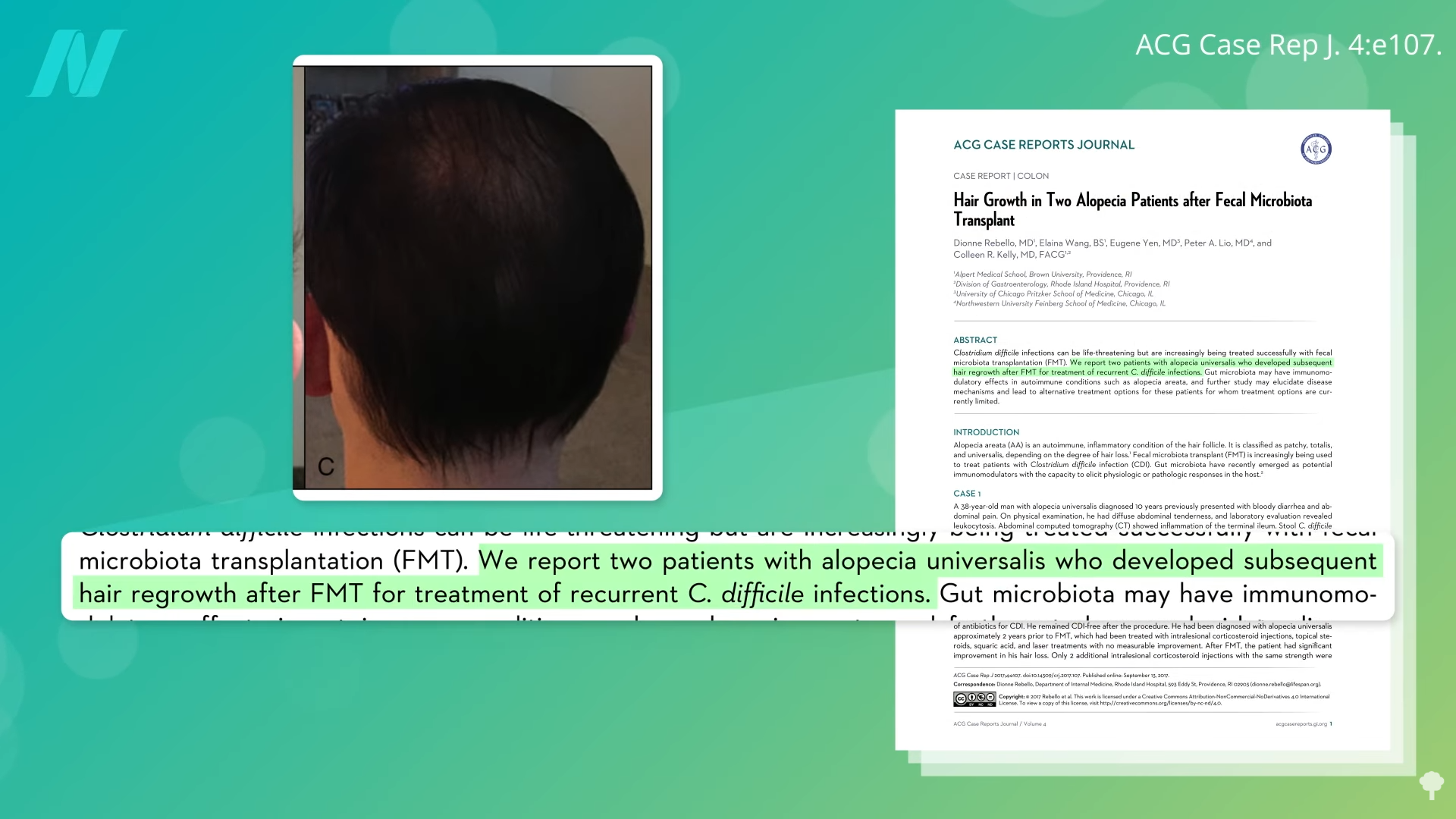
The ethical of the story is to not drink brown smoothies, however to maintain your good intestine bugs blissful.
Inhabitants research have discovered that male sample baldness is related to poor sleeping habits and the consumption of meat and junk meals; whereas protecting associations have been discovered for the consumption of uncooked greens and recent herbs, in addition to often consuming soymilk. Ingesting soy drinks on a weekly foundation was related to 62% decrease odds of reasonable to extreme hair loss, elevating the likelihood that there could also be protecting compounds in vegetation.
Complementary and different medication remedies “boast the flexibility to ‘remedy’ hair loss ‘safely’ with ‘much less unintended effects’ than typical medication. Nonetheless, it is vital…to look past the overarching claims and advertising to critically evaluate the literature.” For instance, many research have little relevance as a result of the proof was obtained from shaved rodents. (Hey, let’s smear shaved mice with bee venom!) And even when researchers do medical research on precise folks, generally there’s no placebo management, so there’s no technique to know if the meals had something to do with the outcomes.
However there was a randomized, double-blind, placebo-controlled research of compounds in sizzling peppers and soy, exhibiting considerably greater promotion of hair progress. Under are some before-and-after footage of each women and men, which you too can see at 2:49 in my video.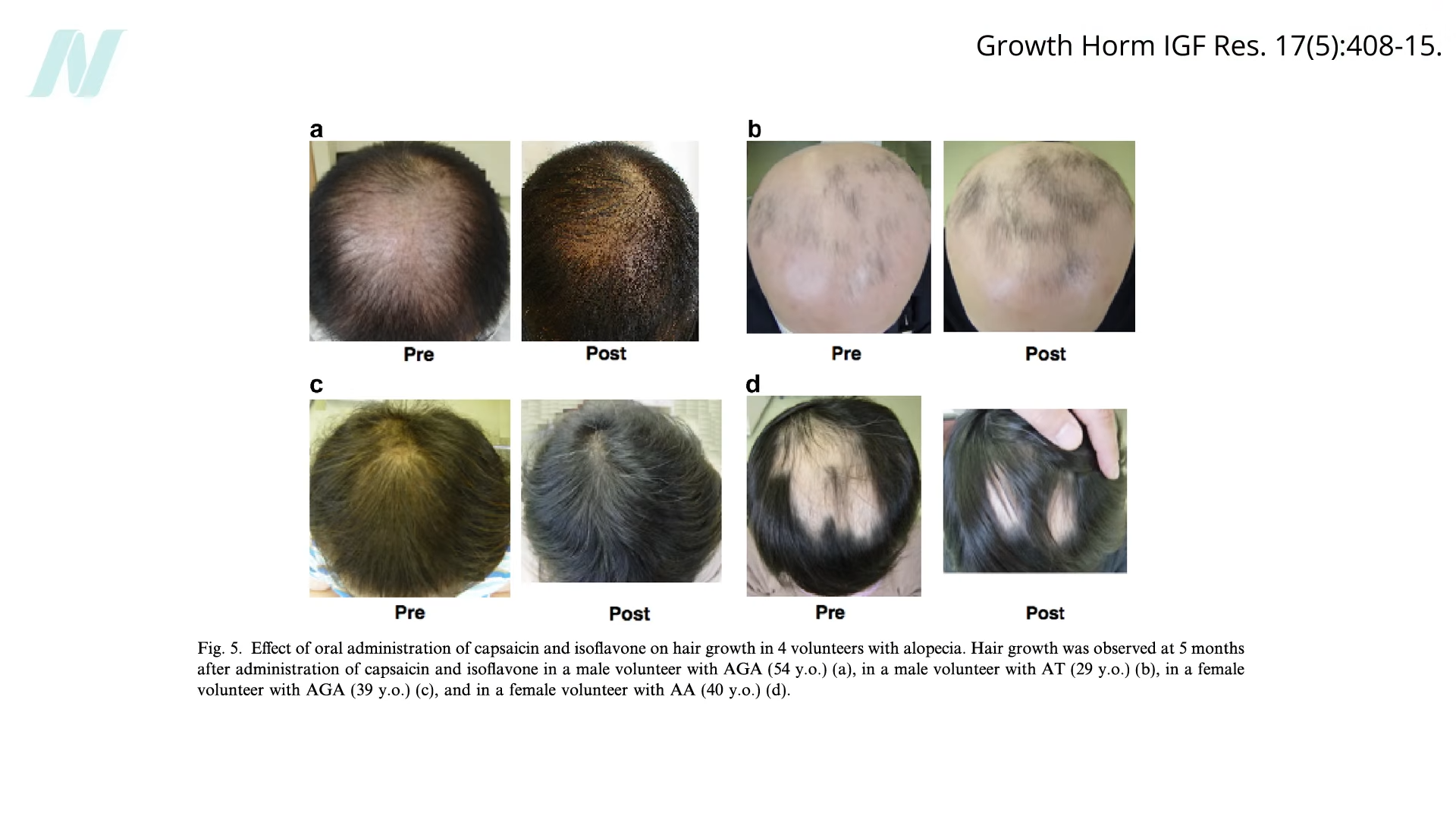
What doses have been they taking? They took 6 milligrams of capsaicin a day and 75 milligrams of isoflavones. What does that appear to be in actual meals? You may get 6 milligrams of capsaicin in only a quarter of a recent jalapeno pepper. That sounds fairly doable. You may get 75 milligrams of isoflavones by consuming ¾ of a cup of tempeh or simply straight soybeans. Soy nuts (dry-roasted soybeans) are much more concentrated, however given the formation of superior glycation end-products in high-fat, high-protein meals ready at excessive temperatures, I’d counsel avoiding routinely consuming roasted or toasted nuts, seeds, or soy.
There’s additionally been a randomized, double-blind, placebo-controlled trial of pumpkin seed oil. The place did that concept come from? In 2009, a research out of South Korea discovered that randomizing males with BPH—benign prostatic hyperplasia, also called enlarged prostate glands—to only 320 milligrams of pumpkin seed oil a day (that’s a few sixteenth of a teaspoon, so just some drops a day) improved urinary stream charges. Urinary stream continued to kink off and decline within the management group, however these taking the equal of consuming simply two single pumpkin seeds a day noticed a major enchancment, as you possibly can see beneath and at 4:18 in my video.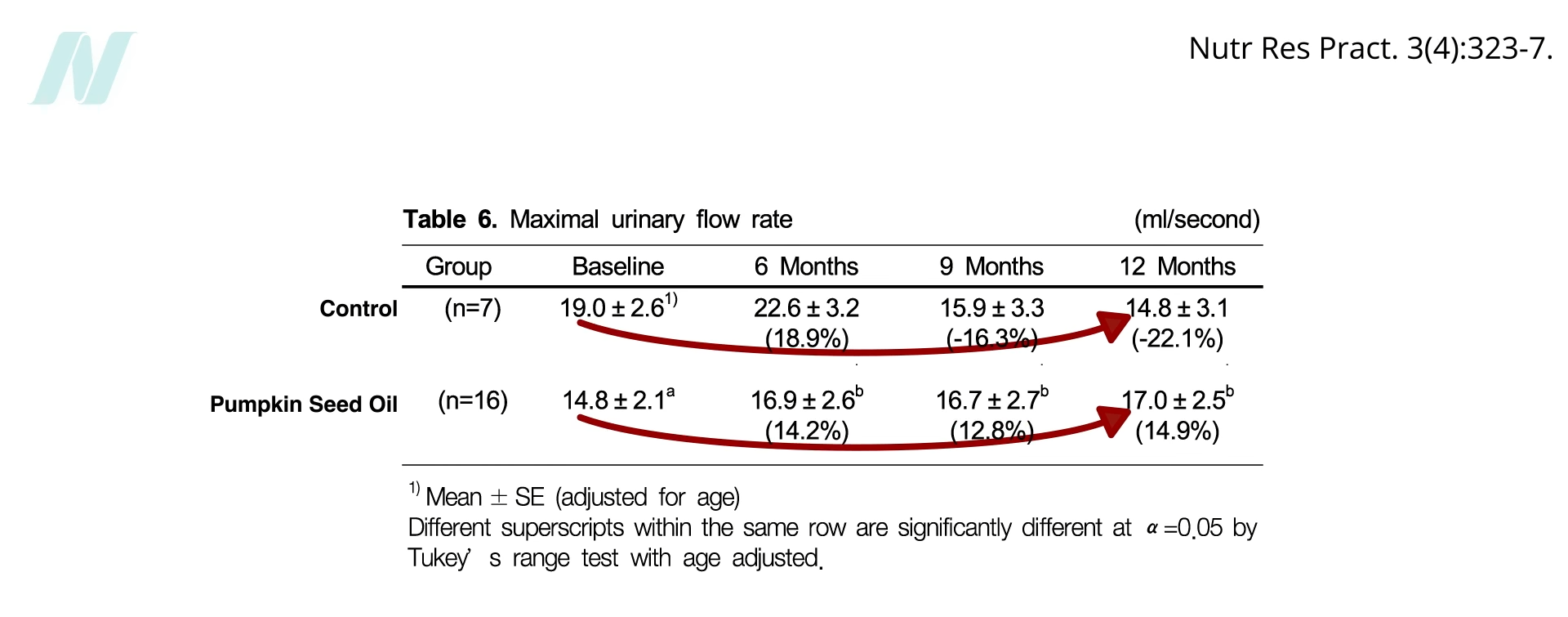
That might appear to be an anti-androgen impact, so perhaps it might assist with hair loss. It appears to work in mice when used topically, however what about in folks simply consuming pumpkin seeds? Sadly, we regularly throw away pumpkin seeds, squash seeds, watermelon seeds, and so they even have a “wealthy repertoire” of vitamin. However you don’t know if they really work for hair loss till you set them to the take a look at.
In a research, 76 males with male sample baldness obtained both 400 milligrams of pumpkin seed oil a day hidden in capsules or placebo capsules for a couple of months. (Once more, 400 milligrams is like consuming two or two and a half pumpkin seeds a day.) The researchers measured scalp hair progress with all types of goal and subjective measures, and after 24 weeks of remedy, self-rated enchancment and satisfaction scores within the pumpkin seed oil group have been greater, and so they objectively had extra hair—a 40% enhance in hair counts in comparison with solely 10% within the placebo group. Under are some consultant before-and-after pictures of the development in hair protection on two and a half pumpkin seeds’ price of day by day oil, which you too can see at 5:25 in my video.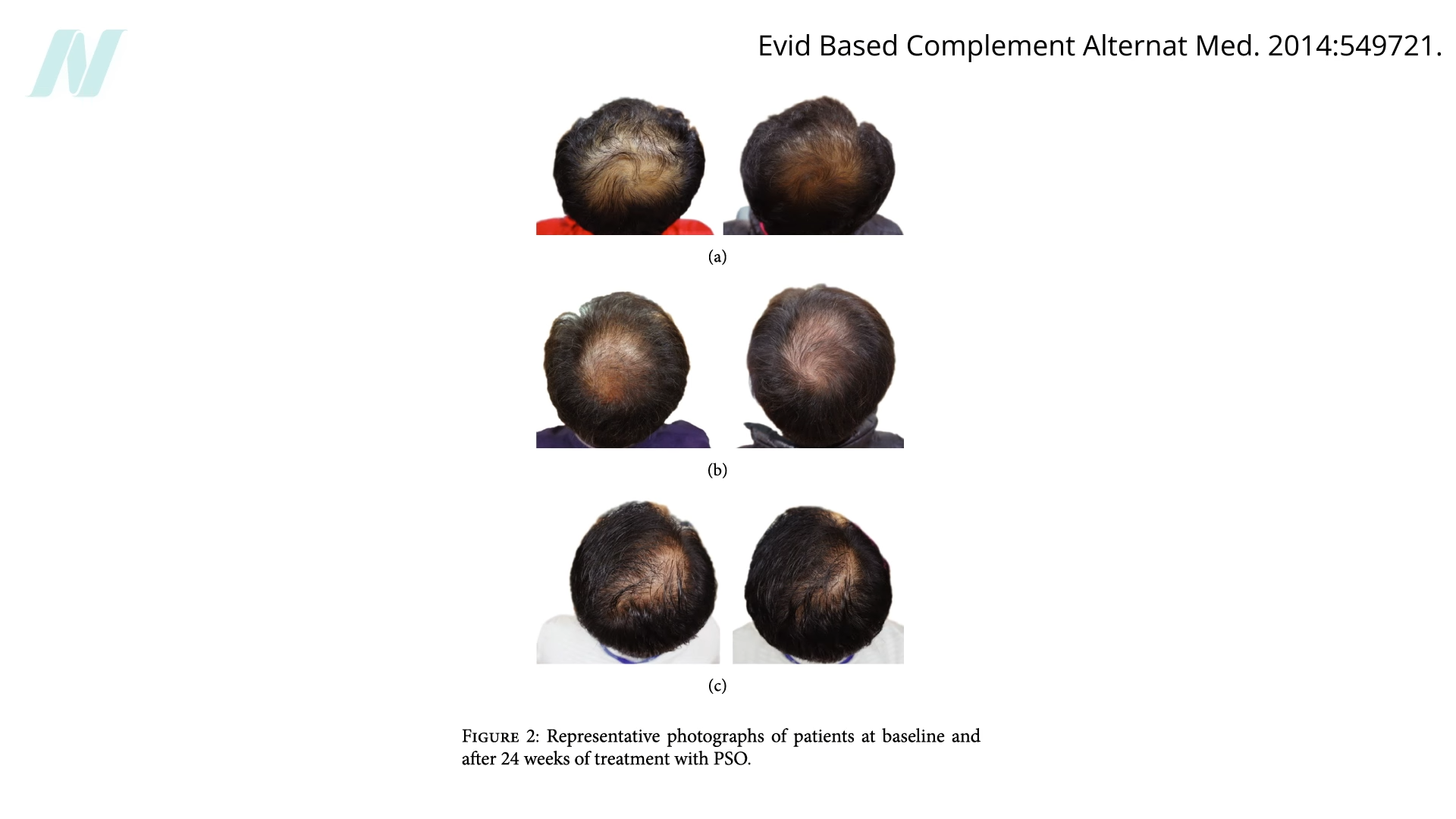
Present these footage to investigators blinded to group project, and so they price the placebo teams as getting barely worse over time however the pumpkin seed oil group getting considerably higher. Within the pumpkin seed oil group, 95% have been rated as both unchanged or improved, whereas within the placebo management group, greater than 90% have been labeled as unchanged or worsened. Given such a pronounced impact, would possibly we be frightened about sexual unintended effects? Researchers used an index of erectile dysfunction earlier than and after the research and located no proof of adversarial results.
Physician’s Be aware
That is the final in a three-part collection on hair loss and progress. The earlier two blogs have been Do Hair Development Dietary supplements Work? and The Advantages and Dangers of Hair Loss Medication.
A handful of pumpkin seeds would fulfill my Every day Dozen advice for nuts and seeds. See Dr. Greger’s Every day Dozen Guidelines.


